
Lack of Affordable Health Care For Chicago Residents

Photo by Eric Nwachukwu

By Carolina Manrriquez and Eric Nwachukwu

Jocelyn Garcia, 25, is an administrative assistant at Access Community Health Network and has been uninsured for over two years.

“I am still with the same concerns I’ve had over the past two years,” she said. “What if I get into an accident, or I slip and I fall?” 

Photo by Carolina Manrriquez

When Garcia received the renewal form for Medicare, she submitted it and shortly discovered she had been denied due to her income of $2,000/month. Garcia is currently making minimum wage, $13/hr and works a full 40 every week. 

According to Healthcare and Family Services, a single person must make about $1,366/month to qualify for Medicare. A resident must make below minimum wage which is now $13/hr. or work part time to meet this requirement. Anyone working full-time or pulling over time will certainly not meet this requirement. 

And Garcia is not alone. According to the US. Census Bureau, as of 2018 14.2% of Chicago residents that are under the age of 65 are uninsured. That is about a total of 384,251 people out of the population of 2.7 million residents of Chicago that continue to live without health insurance. 7.1% of the population without insurance are under the age of 65 with a disability.

Yolanda Rangel 23, was denied coverage due to not submitting the completed verification forms for her unemployed status. 

“How are we supposed to prove that we don’t have an income when we are not working?” she asked, frustrated. Rangel did not know what to submit in regard to proof of no income and was denied after failing to prove she was not working.

Many people don’t understand that the main difference between Medicare and Medicaid is ultimately age. Regardless of your income, Medicare is a federal program that provides health coverage if you are 65 or older, or if you are under 65 and have a disability. Medicaid is a state and federal program that provides health coverage if you have a very low income. 

Seeking private insurance is another way to go whether it is due to one not qualifying for Medicare/Medicaid, or if they are employed but their employer does not offer health insurance benefits. 

Infographic: Interview with Leiser

“We try to help them get the best deals,” said Nancy Leiser, an administrative assistant from Standring Financial, where often clients seek out individual health insurance. Leiser has worked with insurance for over 20 years, including some time with Allstate insurance.

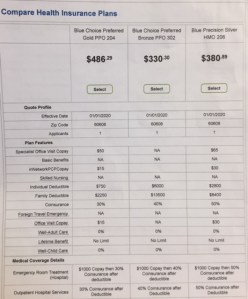
“We go with Blue Cross Blue Shield about 95% of the time and we have silver, bronze and gold plans. Some rates are still affordable but what 21-year-old has $486/month just for insurance if they want a gold plan?”
“I have prioritized paying other bills and my student loans over my own health, unfortunately,” said Garcia. 

“Since most Medicaid users have a hard time paying out of pocket costs, there are federal rules put in place that prohibit some states from charging premiums and limit total costs to no more than 5% of family income. That is extremely helpful in providing the ease of mind of families that are worried about issues in their health but are worried about finances” says Jerome Monegan.

According to Medical News Today, Medicaid spending is primarily centered around the elderly and people with disabilities. Since the budget is put aside for them, they also make up one in four beneficiaries but account for almost two-thirds of Medicaid spending. Medicaid is the primary payer for institutional and community-based long-term services and support. 

Over half of Medicaid spending is attributable to the highest-cost five percent of enrollees. However, on a per-enrollee basis, Medicaid is low-cost compared to private insurance, largely due to lower Medicaid payment rates for providers. If Medicaid enrollees had job-based coverage, their health care cost would be at least 25% higher. Medicaid spending has been steadily increasing over the years as well, more than private insurance providers. 

“Being at the university, we have uninsured patients.  We are a state institution so that means we take individuals who do not have insurance as well as those with Medicaid and those who have private insurancesaid Jerome Monegan, Human Resources Business Partner at UI Health. “We have approximately 46% of our patient population that are uninsured and/or receiving Medicaid.” 

This shows that in the midst of all corruption in the country, there are states like Illinois that still care about the people. “It is against the law to deny care of an individual if it is life-threatening. If they do not have insurance or cannot afford care, patients are at least given services until they are stable enough to be discharged.” says James Monegan. According to the UI Health system, a patient can not be denied medical attention.

“There are programs such as Care Gap Outreach, where we try to encourage patients without insurance that have not been in for a check-up in a while to come in and talk to them about prioritizing their health,” said Garcia.

 She often meets patients who are discouraged to return for further treatment due to low income and lack of health insurance.

“Money would ultimately be a factor in most of those cases where it’s a combination of things because those that are not insured typically do not go to the doctor for routine care or routine checkups, so the likelihood of them going to the doctor is unfortunate when it gets to a point where they have to go to the emergency room for treatment,” said Monegan. 

“Statistics show that individuals will actually delay healthcare to find a cheaper option. For those individuals who do not have insurance or who may be underinsured, cost is a heavy factor and that really does delay the care individuals need versus those that have good insurance in place, and higher income, they are more likely to go the doctor faster to get care compared to those who are lower income or uninsured.”

Compared to other Metropolitan cities, Chicago is cheap. The cost to live comfortably in San Francisco is $100k. The cost to live comfortably in LA is $74k. With the average income in Chicago being reported around $55k, people should not be skeptical on health spending. The percentage of those uninsured should be lower in Illinois. That will come at the expense of many other factors, first off making sure everyone is aware of all the free health coverage. You can only get help when you have the knowledge to find it.  

At the end of the day, health is very important. Mental, physical, and emotional health all work together. One is just as important as the other. Chicago has done a decent job at making sure residents can get the help they need regardless of race, income class, and even the status of citizenship. 

“Young people think they’re invincible and do not realize that one accident can wipe them out forever,” Leiser said of her concern with young adults who do not try to get covered whether it’s through Medicare, their parents or private insurance. 

If you are currently uninsured and seeking for some health insurance coverage, the deadline for open enrollment is December 15th. 

10 Best Sneaker Stores in Chicago

Fashion is so diverse in Chicago. It is important to look your best wherever you go. Since the culture in the city is so rich people here express themselves in so many ways. One of them is through footwear. What you have on your feet says a lot about you, and should be taken seriously.

From Leaders 1354 downtown, to the chill Villa store in Hyde Park, there is a little something for everyone. Ready to look good and stay fresh? Stop by one of these shops to get an inside look on exclusive sneakers and apparel while being in some of the nicest neighborhoods in the city. Check out the best sneaker stores in Chicago.

Google Trends: Chicago’s New Mayor

Comparison of candidates this last year

A Year Look

The race for the Mayor in Chicago has always been a big deal. This first graph shows how often Mayor candidates were Googled withing the last year. They were barely researched, until political season came around. On Feb. 27th, 2019, which is voting day, they had the most amount of searches. Lori Lightfoot had just about triple the amount of searches than Toni Preckwinkle that day.

Candidates within a 3 month period

The Best Candidate

This graph shows a 3 month period from Feb. until April regarding the voting elections.

The election was held on February 26th, 2019. However, neither candidate received a majority of votes. They were tied in the race. This has not happened many times in history. There was then a runoff election that was held on April 2nd, 2019 to finish what was started. Lightfoot beat Preckwinkle, becoming the first female Mayor of Chicago.

Lightfoot’s victory was monumental, as she was also the first queer Mayor of Chicago.

All throughout the months they were researched evenly, with the exception of February and April, respectively. The majority of the days Lightfoot was Googled more than Preckwinkle, especially in Illinois. As with most things, people do not pay politics too much attention until it boils down to the last two candidates.

Practice Story

By Bob Smith

Gov. Pat Quinn visited DePaul University’s Loop campus on Wednesday to discuss how pension reform is harming the Monetary Award Program (MAP) college scholarships and access to higher education in Illinois.

“This is so important to our state, not only in the past, but certainly now and in the future,” Quinn said.

“We want everyone to have the opportunity to go to college that has the ability to go to college.”

MAP grants are need-based college scholarships that allow merit students who are in need across the state and do not need to be repaid by the student. Quinn said that due to cutbacks and having to pay more money in the pension amount, almost 18,000 students lost their MAP grant scholarships this year.

“We do not want anyone denied that opportunity because of finances,” Quinn said. “We can’t afford to lose all the talent that exists, all the ability that exists for higher education to help our economy and to help all of us, because there are financial challenges that deny someone the opportunity to go to community college or a four-year university — public and private — in our state.”

Quinn was joined by several Illinois college students, including DePaul Student Government Association Vice President Casey Clemmons.

“Every year over 5,000 DePaul students receive MAP grants, and just like the students who have already spoken here today, all of these DePaul students rely on this funding in order to continue their college careers,” Clemmons said.

“Because the number of Illinois students eligible to receive MAP is currently increasing, existing funding does not allow the state to assist all the eligible students. As a result, without action by the Illinois state leadership, more DePaul students than ever will see their MAP funding disappear this year and more

DePaul students than ever will be forced to give up their education due to finances.”

More than 150,000 students nationally receive MAP grants each year.

Clemmons told the audience that on Tuesday, DePaul’s SGA unanimously passed a resolution calling on the Illinois general assembly and the governor to ensure the longevity of the MAP program.  He read the resolution aloud and presented a copy to Quinn. 

Ken Thomas, a University of Illinois Board of Trustees student member, MAP recipient and University of Illinois Chicago student, told how he wouldn’t be where he is today if it wasn’t for the MAP grant.

“My mom, when I was in high school, had to work two jobs just to keep food on the table,” Thomas said, “and if we didn’t have [the] MAP program like we do today, I know that I wouldn’t be where I am today; graduating with a degree, hoping to be a productive member of society.” 

Having a productive and functioning society and economy is what Quinn says it’s all about.

“Jobs follow brainpower,” he said. “We want to make sure we have smart people in Illinois. Well skilled, well-educated students coming out of college with graduate degrees and diplomas so they can create jobs, create new businesses,” he said. “Our goal in Illinois is to have at least 60 percent of the adults in our state with a college degree or college associate degree or career certificate by the year 2025. In order to achieve we have to make sure we have a good scholarship program.”

Clemmons said that in order for that to happen, state legislatures need to reflect upon the question, “What must be done?” and do what’s required. 


Introduce Yourself (Example Post)

This is an example post, originally published as part of Blogging University. Enroll in one of our ten programs, and start your blog right.

You’re going to publish a post today. Don’t worry about how your blog looks. Don’t worry if you haven’t given it a name yet, or you’re feeling overwhelmed. Just click the “New Post” button, and tell us why you’re here.

Why do this?

  • Because it gives new readers context. What are you about? Why should they read your blog?
  • Because it will help you focus you own ideas about your blog and what you’d like to do with it.

The post can be short or long, a personal intro to your life or a bloggy mission statement, a manifesto for the future or a simple outline of your the types of things you hope to publish.

To help you get started, here are a few questions:

  • Why are you blogging publicly, rather than keeping a personal journal?
  • What topics do you think you’ll write about?
  • Who would you love to connect with via your blog?
  • If you blog successfully throughout the next year, what would you hope to have accomplished?

You’re not locked into any of this; one of the wonderful things about blogs is how they constantly evolve as we learn, grow, and interact with one another — but it’s good to know where and why you started, and articulating your goals may just give you a few other post ideas.

Can’t think how to get started? Just write the first thing that pops into your head. Anne Lamott, author of a book on writing we love, says that you need to give yourself permission to write a “crappy first draft”. Anne makes a great point — just start writing, and worry about editing it later.

When you’re ready to publish, give your post three to five tags that describe your blog’s focus — writing, photography, fiction, parenting, food, cars, movies, sports, whatever. These tags will help others who care about your topics find you in the Reader. Make sure one of the tags is “zerotohero,” so other new bloggers can find you, too.

Design a site like this with WordPress.com
Get started